ONLINE 58.0°N, 24.5°E

Building the operating system for the Nordic countryside

A new economic, cultural, and technological framework for communities who want to stay rooted, build local wealth, and thrive on their own land.

Life here is good. Forests, sea, community — everything essential.

What we don't have are the systems that keep value close to home.

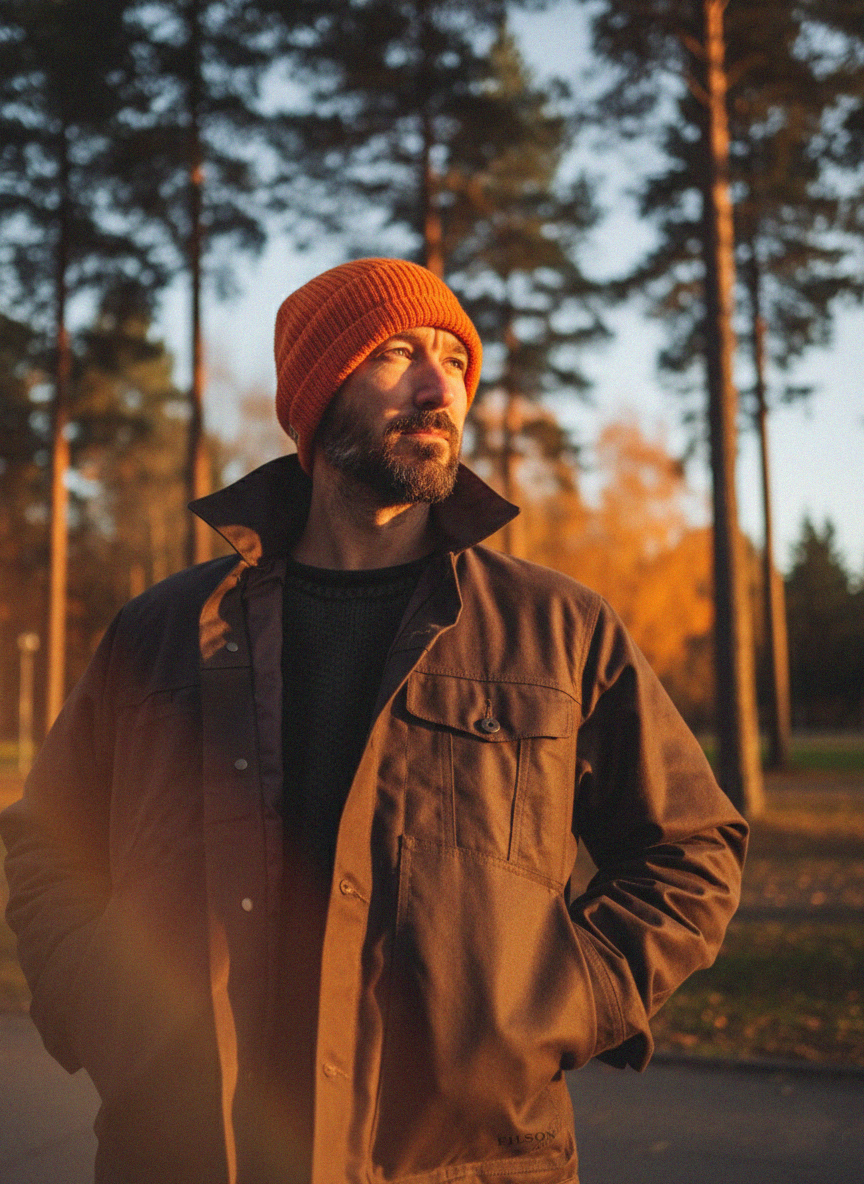
Estonian forest landscape
HÄÄDEMEESTE
EST 2025

How we got here

In 2013, after nearly twenty years building systems on the internet, my wife and I bought a run-down 1930s log house deep in the forests of southwest Estonia. We didn't come here looking for an escape. We came because something in us recognised truth in this land — its purity, its quiet, its abundance.

For twelve years this has been our home. I've renovated our house by hand, managed our forest, learned the rhythms of the soil and seasons, and raised two young boys who know the smell of pine before the sound of traffic.

And yet, despite living in one of the most abundant regions in Europe, almost nothing around us is designed for rural life anymore. The modern systems we rely on — logistics, payments, platforms, services — were built for crowded cities, not for people who live close to the land.

That mismatch defines everything we struggle with: scattered services, invisible opportunities, 100-kilometre trips for basics, and young people leaving because they can't see a future here. The countryside works — the infrastructure doesn't.

$ cat mission.txt

No one is coming to build the systems we need.

So we are building them ourselves.

Economic leakage

Where value goes

87%

of every euro spent in rural Estonia leaves the region

— Based on local economic multiplier studies, Häädemeeste vald analysis 2023

WHERE DOES THE MONEY GO?

  • Fuel to foreign refineries
  • Groceries to supermarket chains stocking imports
  • Taxes collected locally, spent in Tallinn
  • Services lawyers, accountants, all in the city
  • Materials our forests, processed elsewhere, sold back to us

"This isn't poverty. It's plumbing."

The money exists. The people work. The land produces. But the pipes route value elsewhere.

What happens when money stays local

When you spend €1 locally and your neighbour spends it locally too, that euro generates revenue across the whole community. This is the local multiplier effect. Use this simulator to see what happens when a parish increases local spending by just a few percent.

Local retention rate 15% Current baseline: 10%
Parish annual spending €50M Häädemeeste ~€49M/year
Additional local revenue €2.9M per year vs 10% baseline
Jobs supported 580 full-time equivalent vs baseline
Wage growth (Yr 10) +25% vs stagnant baseline local salaries rise
Property index (Yr 10) +40% value appreciation demand increases
Cumulative Local Economic Activity
Baseline (10%)
With improved retention
Gain

Increasing local retention from 10% to 15% generates €2.9M additional local revenue per year. Over 10 years, this compounds to €34M cumulative benefit, supporting 580 jobs while local wages grow 25% above the stagnant baseline.

Model based on LM3 (Local Multiplier 3) methodology. Baseline: Häädemeeste population 4,976, €9,900 spending/capita, €15K avg rural salary. Wage/property growth assumes local economic strengthening increases competition for workers and housing demand.

The Decisive Decade for Rural Estonia

Across Europe, the systems that supported food, logistics, and local life for a hundred years are breaking down — slowly in some places, brutally fast in others. The cracks are now visible everywhere.

Demographics are collapsing

Youth populations are shrinking. Schools consolidate. Services disappear. Once a village loses its young families, it rarely recovers.

Food systems are unstable

Europe's harvests are dropping. Costs are rising. Imports dominate shelves while local farms struggle to survive.

Value is leaking out

Every supermarket trip, every fuel refill, every city service sends money away. Rural regions are bleeding millions each year.

Estonia sits in a unique position

Global forces are destabilising, but here we still have land, water, forest, clean air, and enough space to build something sane.

And at the same time…

We have everything the world will increasingly need: water, forest, space, clean soil, and a culture that still remembers how to build, grow, and repair.

But the truth is simple: if we don't build new systems now, the old ones will fail us faster than we can adapt.

This moment won't come again. We either build new local systems now — or the countryside is decided for us.

System Diagnostic

Rural life across the Nordic–Baltic region is facing a structural crisis. Not because people don't want to live here — but because the systems that support rural life have collapsed.

ECONOMIC_FLOW

Value extraction detected CRITICAL

Most value created in rural regions leaves immediately:

  • Purchases routed to cities
  • Raw materials exported unprocessed
  • Youth talent migrating out
  • Tax bases shrinking
GOVERNANCE

Policy limitations WARNING

This is a systems problem, not a policy problem. Requires local ownership, local data, local production, ecosystem-wide coordination.

YOUTH_RETENTION

Talent drain active CRITICAL

Rural youth aren't lacking motivation. They're lacking paths — to earn, to build, to create a future.

CULTURAL_INTEGRITY

Identity erosion WARNING

Local knowledge, traditions, and community bonds degrading as population ages and disperses.

RURAL_SYSTEM_MONITOR

Population loss
-78%
Service closure
-65%
Economic leakage
-54%
Youth retention
-47%
Local production
-38%

Rebuilding infrastructure

Not highways. Something more foundational:

We are rebuilding the invisible structures — economic, cultural, and technological — that make rural life viable in the 21st century.

Economic systems
Cultural frameworks
Production networks
Local marketplaces
Forestry + materials
Identity anchors

What This Is Not

Clearing assumptions so the message lands clean.

Not Facebook We're not building a group, feed, or endless chatter platform.
Not a government project Public institutions can use it, but it doesn't depend on them.
Not charity or aid It is a self-sustaining economic engine, not a grant-dependent experiment.
Not an online store It's a visibility and coordination system that makes rural trade possible again.
Not a city system It is engineered from scratch for low-density, irregular patterns of life.
Not temporary It is long-term infrastructure — the spine of the next rural century.

This is infrastructure. Built to last.

estland.app

The marketplace and economic engine for the regenerative Nordic countryside.

SYSTEM OVERVIEW

estland.app is an economic operating system — a coordinated platform that connects:

  • Local producers (foresters, farmers, makers)
  • Buyers (individuals, businesses, visitors)
  • Services (logistics, payments, listings)
  • Cultural institutions (events, heritage, identity)

The goal: keep value circulating locally instead of leaking out to distant cities.

ROLLOUT
PHASE 01

Local — hdm.ee

ACTIVE

████████████░░░░░░░░ 60%

Build a functioning economic engine at the village/parish level. Tools for trade, forestry & materials, services, events, and local wealth flow.

Ground truth. Local-first. Proof of model.

Visit hdm.ee
PHASE 02

National — Estland.app

PENDING

░░░░░░░░░░░░░░░░░░░░ 0%

Unify regions into a shared framework. National marketplace, regional analytics, empowerment of local producers.

One country. Many self-sufficient communities.

PHASE 03

Nordic Expansion

FUTURE

░░░░░░░░░░░░░░░░░░░░ 0%

Interconnect rural regions across the Nordic–Baltic world. Cross-border rural trade, shared regenerative standards.

A Nordic network of thriving countryside economies.

Design Principles

The philosophy behind every feature.

Local-First

Built for rural reality, not adapted from urban systems.

Ground-Truth

Information comes from real people, real places.

Human-Scale

Simple interfaces, practical workflows.

Offline-Capable

Assumes weak internet, dead zones, power outages.

Distributed

No central bottleneck. Local networks work independently.

Transparent Flow

People see where money goes — and where it leaks.

Participation Is Power

Every listing, purchase, or connection strengthens the system.

Built With Locals

The region co-creates the tools. No extraction.

How It Grows

The rural operating system strengthens itself.

Visibility Access Circulation Growth

Visibility

Every product, service, skill, and project is listed. Locals no longer operate in the dark.

Access

People find what they need without long drives. Buying local becomes easier than going to the city.

Circulation

Money stays in the region longer. A euro moves through hands 2–3 times instead of leaving once.

Growth

More demand supports more supply. More families stay. More services emerge.

Each loop strengthens the next. Eventually, the region becomes self-reinforcing.

This is not an app. It is a flywheel for rural prosperity.

How the Pieces Fit

estland.app Core platform
powers
hdm.ee Häädemeeste (active)
region_02 Next community
region_nn Future
serves
Producers
Buyers
Services
Visitors

A Day in Häädemeeste, 2035

It's 2035. The village hasn't grown through marketing — it has grown through meaning.

A young family wakes up in their renovated log house

Breakfast is eggs and vegetables from three kilometres away. Their son checks which micro-gigs are available after school — stacking firewood, helping repair a fence. He chooses the fence job. It pays enough to matter.

At the sawmill, the owner checks orders

For the first time in 20 years, he has more local demand than he can fill. He sees which sizes are needed, which projects will need him next month.

A retired farmer earns steady income

Selling small batches of produce and seedlings — not by standing on the roadside, but through consistent weekly orders. Her land is alive again.

A newcomer family unlocks a "starter path"

Who to talk to for wells, where to source wood, which neighbours have tractors. Everything that used to take years is now available in minutes.

The biggest change isn't visible in charts. It's the feeling that the village works — not through nostalgia, but through modern tools that make local life competitive.

This is what local infrastructure looks like when it finally fits the people who live here.

For Municipalities & Partners

How to plug into the OS.

Municipalities

Gain real-time visibility into local demand, leakage, workforce patterns — without bureaucracy or new staff.

Businesses & Producers

Get direct access to customers, local logistics pathways, and clearer forecasts of demand.

Developers & Builders

See available materials, project timelines, and seasonal needs in one place.

Youth & Schools

Find micro-jobs, apprenticeships, and practical learning within walking distance.

Joining doesn't require commitment — only interest.

We build where the invitation is strongest.

Why Estonia First?

The perfect testbed for rural systems.

Low population density High forest cover Compact but diverse regions Strong digital identity infra Fast governance cycles Cultural memory of self-reliance High mobile penetration Population that values land & craft

Estonia is big enough to matter and small enough to build fast.

If it works here, it will work anywhere in the Nordic region.

This is not a local project. It is the prototype for the rural North.

My Role

Architect of the Estland Operating System.

In 2013, after two decades of building digital systems, my wife and I bought a 1930s log home in the forest of southwestern Estonia. For twelve years I've lived close to the land — managing our forest, raising our children, repairing and rebuilding a home by hand.

Living here made something clear: we are surrounded by abundance, but trapped inside systems not built for us.

So I paused every other project to do what should have been done long ago — build the local infrastructure that rural life actually needs.

MY ROLE IS SIMPLE:

  • Architect the operating system
  • Design the economic loops
  • Craft the interfaces that allow the village to see itself again
  • Prove that rural regions can not only survive — they can lead

Why This Matters

This isn't a startup play.

It's an infrastructure project — something that should have been built years ago, but wasn't, because no government or corporation saw the value in keeping rural economies alive.

The Nordic countryside holds something essential:

Clean water. Sustainable timber. Local food. Deep community. Space to live. But without economic infrastructure, these assets drain away to cities — and the people follow.

We are building the alternative.

Not a utopia. A functioning system — designed from the ground up for rural realities. One that keeps value close to home, and gives people a reason to stay.

$ cat belief.txt

The future of rural is not decline. It's reinvention.

Building for the Nordic countryside?

Looking for collaborators, partners, and communities ready to pilot regenerative rural infrastructure. If you're building something similar — or want to — let's talk.

hello@robertaaron.net
$ whoami
# Systems architect, rural futurist
$ cat location.txt
# Häädemeeste, Estonia (pop. ~4,000)
Response time: typically < 24h
Ready to receive transmission...